
Everything you hate about job hunting, done before you wake up.
The searching. The tailoring. Tracking down who the hiring manager actually is. Retyping the same three answers into a fourth form.
The agent does all of it overnight and leaves it on your desk as drafts. Which frees your evenings for the only part that decides anything: being ready for the room.
It looks where the jobs actually are. Job boards, the applicant tracking systems companies run their hiring on, and career pages directly. Not one aggregator everyone else is already reading.
It finds the humans. The recruiter, the hiring manager, and anyone already in your LinkedIn contacts who could turn a cold application into a warm introduction.
It stops you retyping. Crush Clip & Fill answers the application questions from your profile, and remembers every answer you approve. It fills forms. It never submits.
Example
VP, Data Science
Series C marketplace · San Francisco or remote
- Role scope fit
- 4.8
- Seniority fit
- 4.7
- Comp signal
- 4.2
“ads-side org of roughly 40, reporting to the CPO”From the job description
“built and led the data science org from 6 to 44”From your resume
“$420,000 – $510,000 plus equity”Your floor is $450,000
- Find
- Prepare
- Connect
- Follow up
- Company Intel
- Interviewer Intel
- Q&A Prep
- Interview Coach
- Debrief
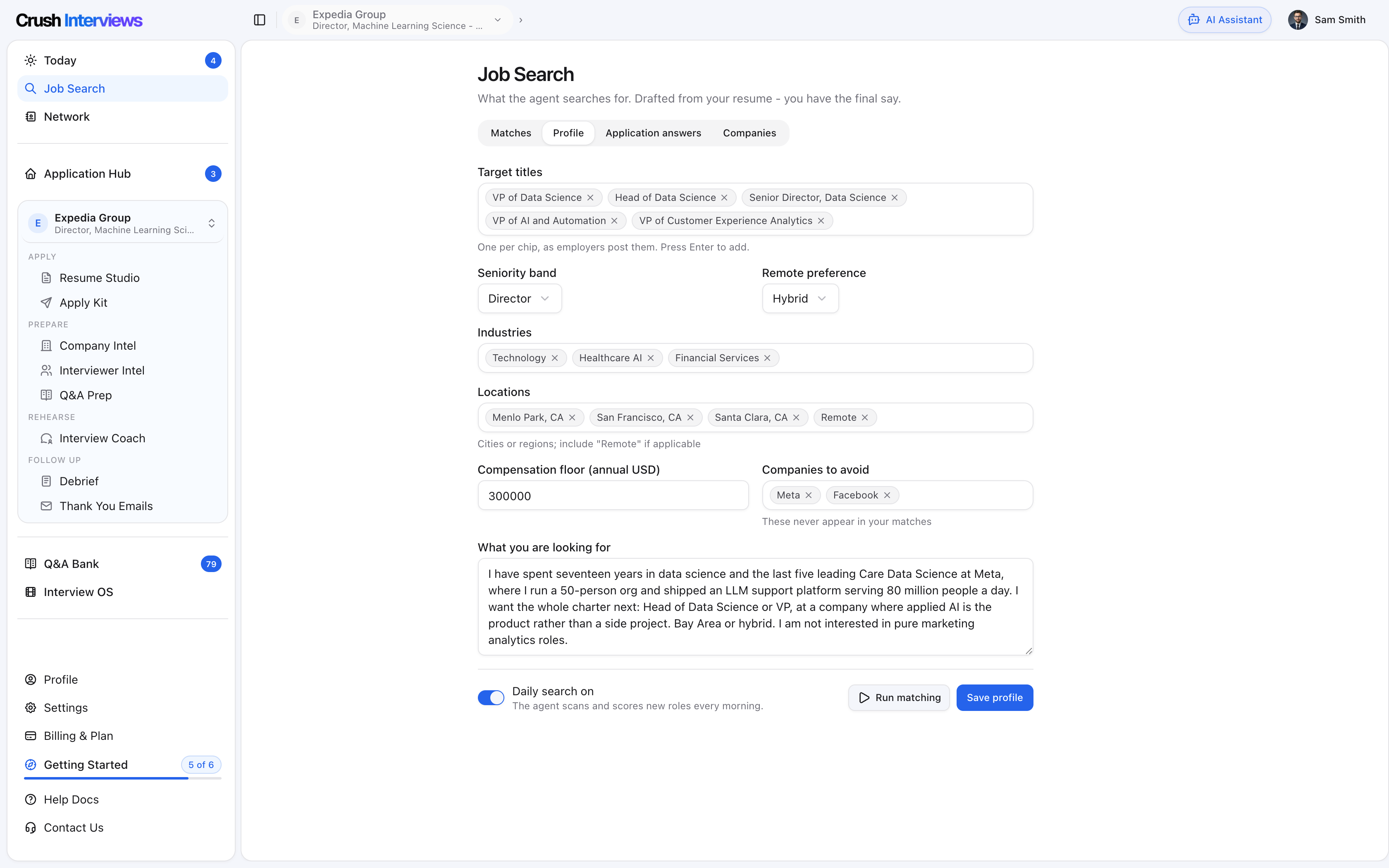
Ten minutes of setup, then never again.
Your search profile arrives already drafted from your resume: the titles you are aiming at, the seniority band, the compensation floor, the places you will and will not move to.
You correct what it got wrong and you are finished. Nothing else about the agent asks for your time again.
The brief, read in two minutes.
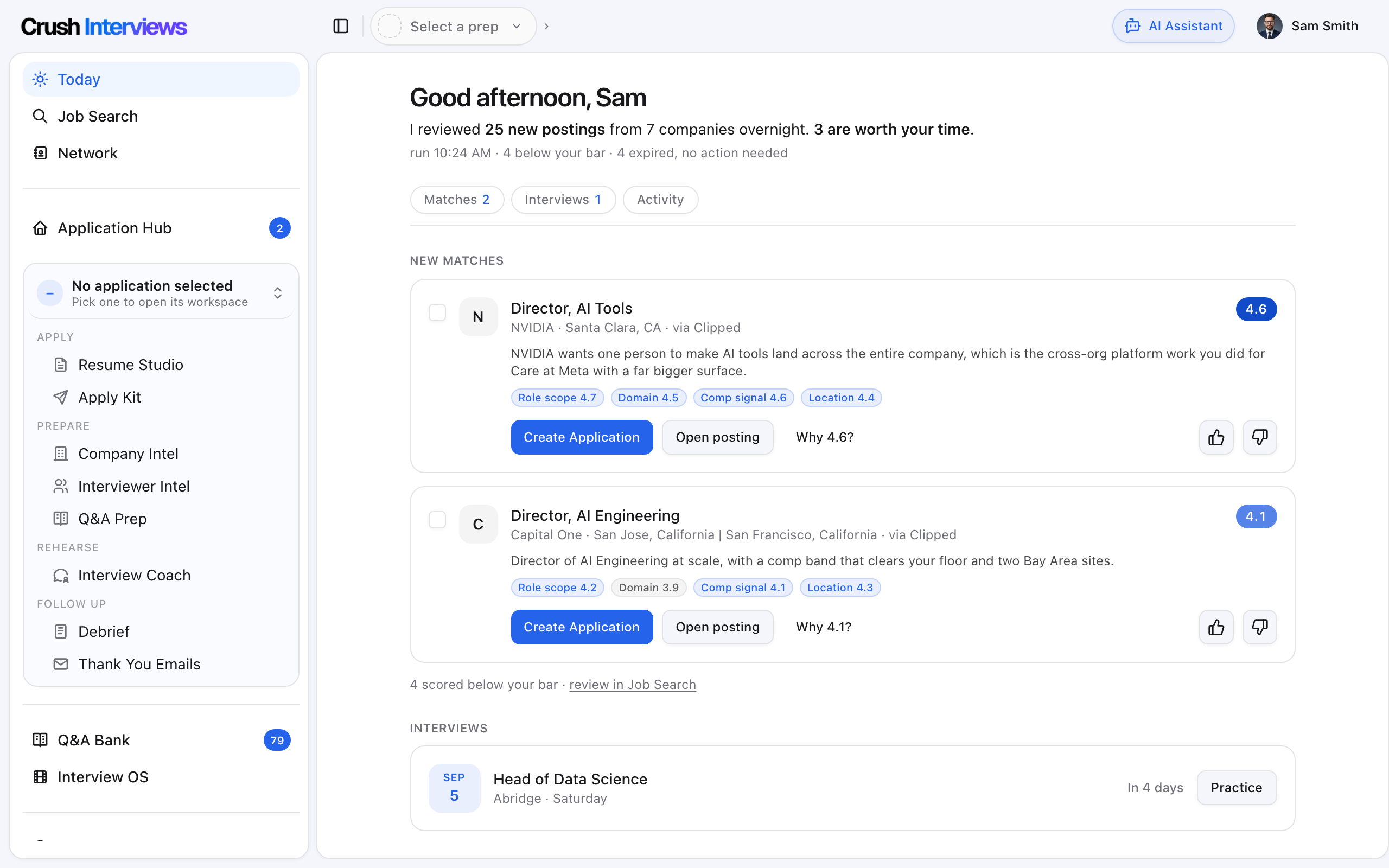
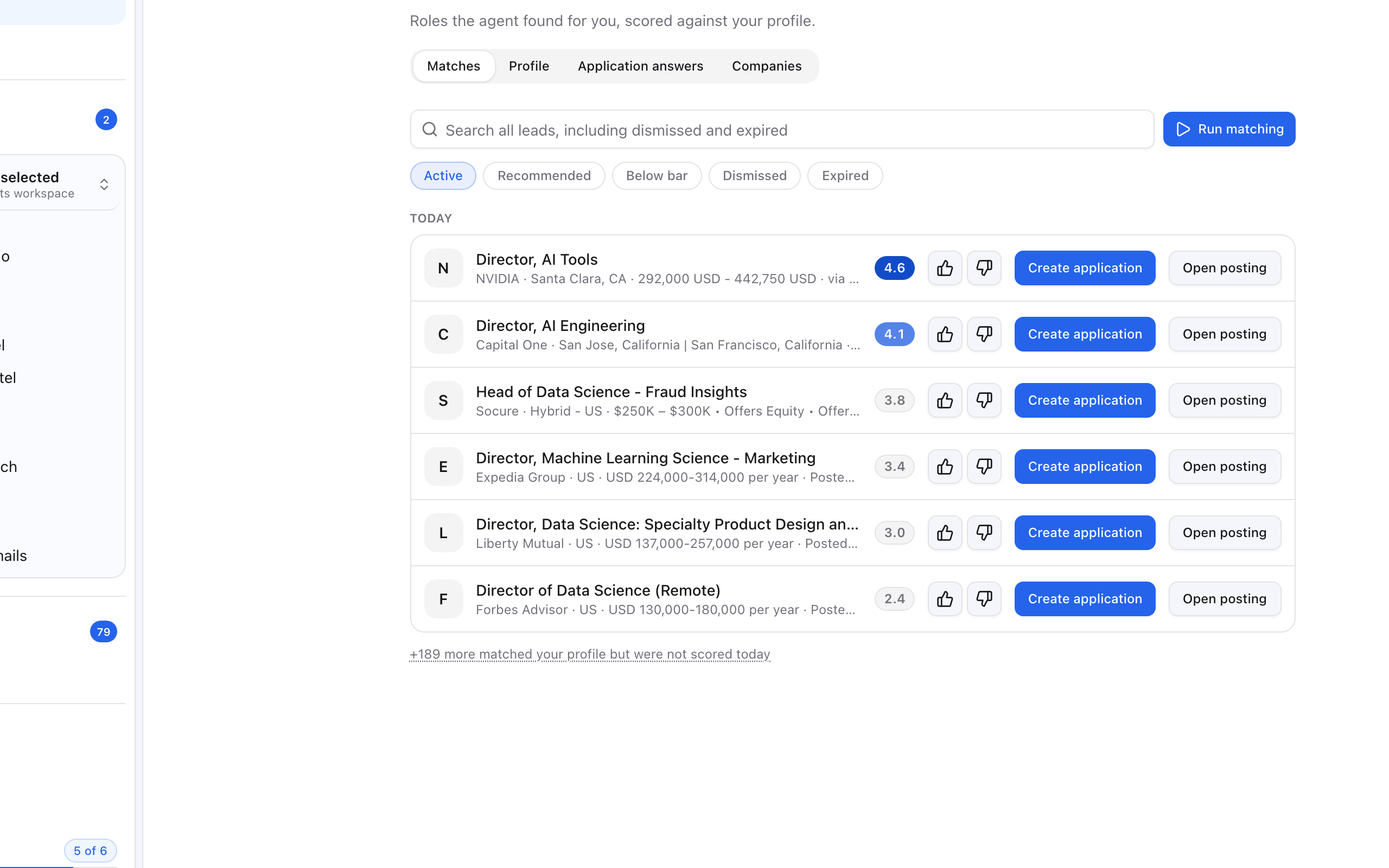
Overnight the agent reads new postings across job boards, applicant tracking systems and company career pages. By 6am the ones that clear your bar are waiting, each with a fit score you can open.
Thousands read. Two worth your time. On the mornings nothing clears your bar, there is no email at all, because a daily digest you learn to ignore is worse than no digest.
The application is already written.
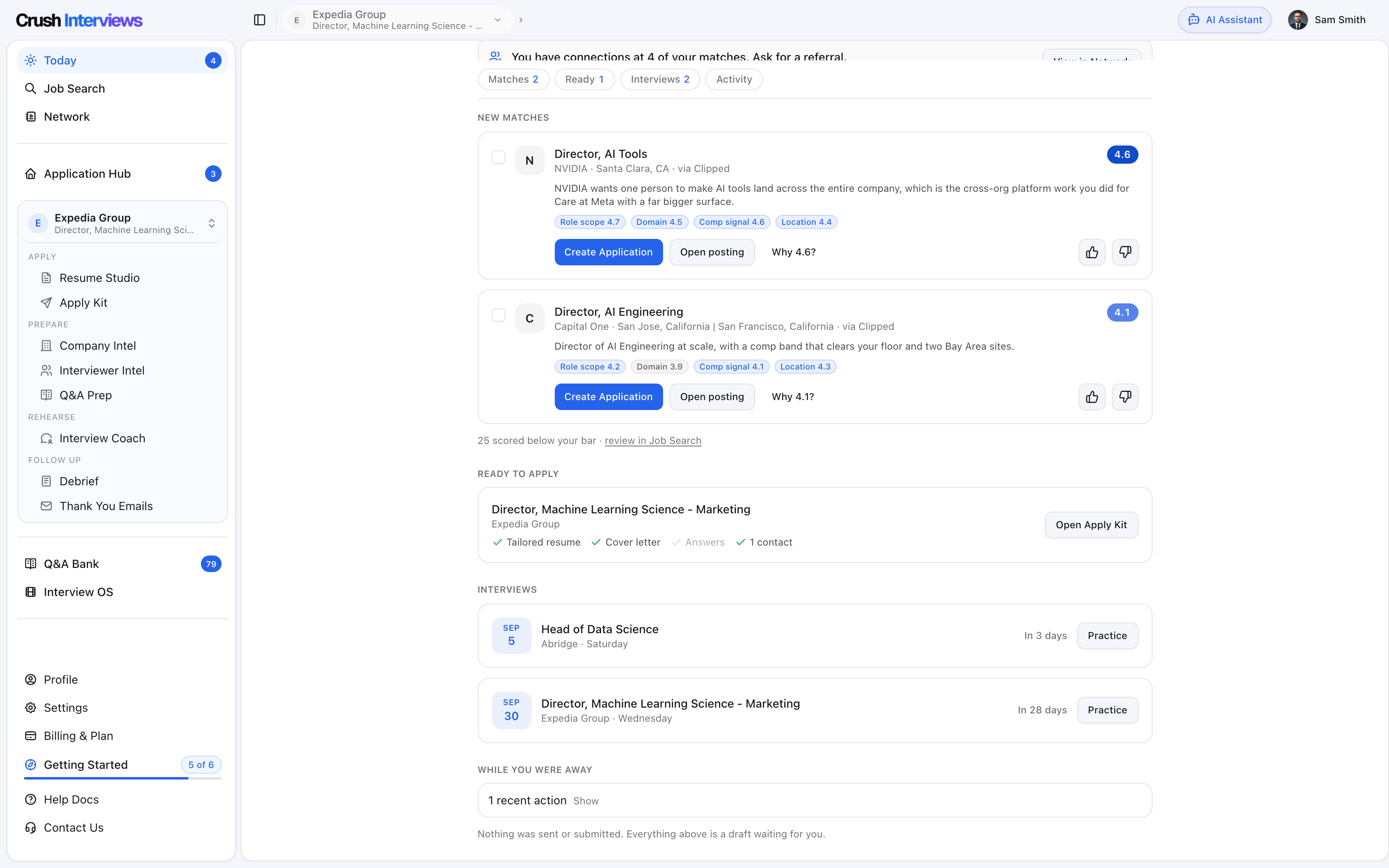
A role worth your time is one tap from the brief. That tap builds the Apply Kit: a resume tailored to that posting, a cover letter, and answers to the form questions. Your original resume is never touched.
It also surfaces who you already know inside the company and drafts the referral ask, because at this level an internal referral usually has to land before the application does.
Under ten minutes from opening the brief to sending the application, and most of that is you reading the job description properly.
A reminder when nobody replies.
If an application goes quiet, the agent drafts a follow-up and tells you who to send it to: the recruiter, the hiring manager, or whoever made the referral.
You are only nudged twice. The chances of getting a reply after a second nudge are very slim, so there is no third.
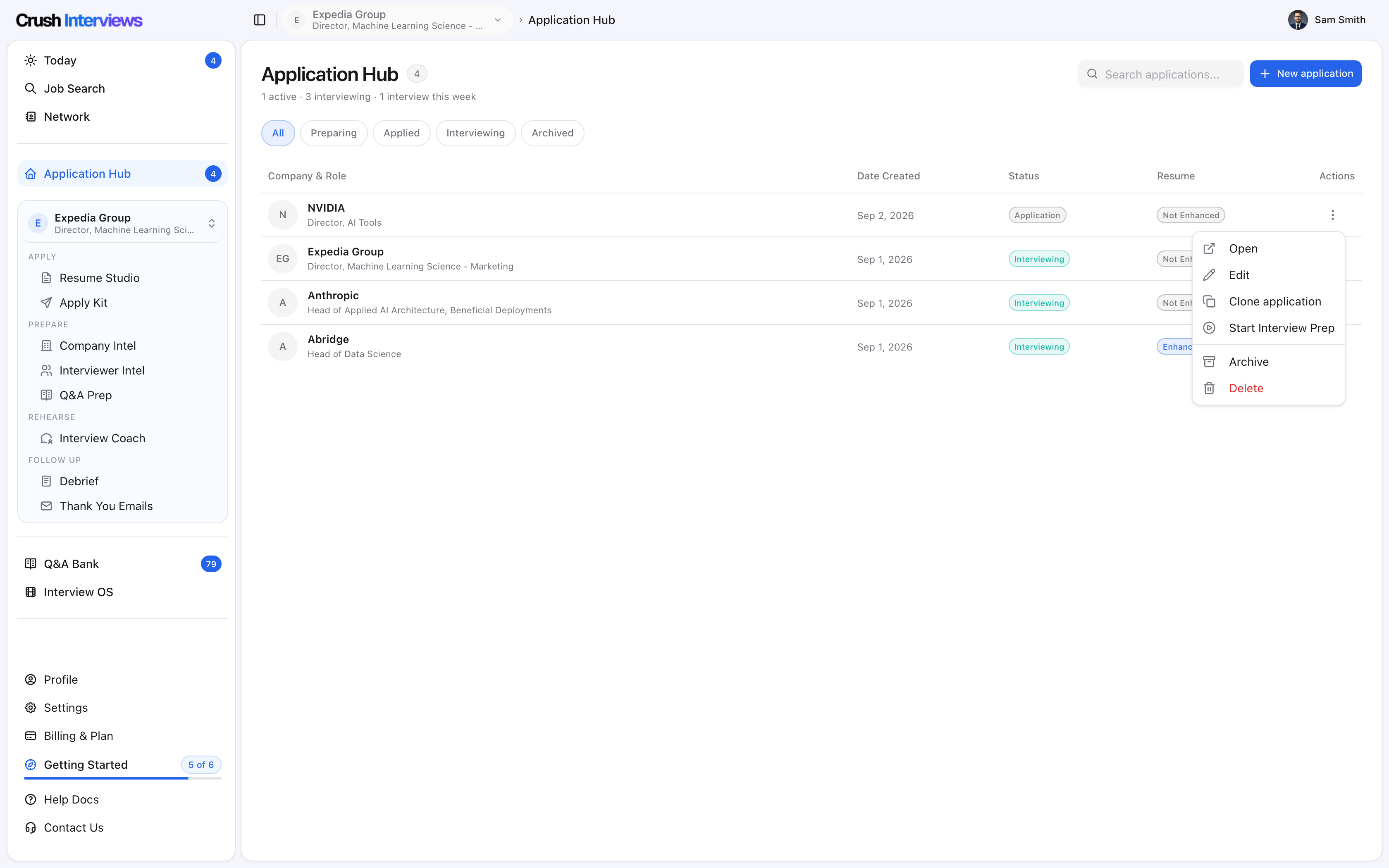
This is the part that decides the offer.
Everything up to here was logistics. Getting the interview is a precondition; it is not the thing you are being paid for. What happens next is, and it is what Crush Interviews was built for.
You tap Start Interview Prep. The company research the agent already gathered becomes your Company Intel brief. The people it already found become Interviewer Intel profiles. The answers you approved during the application are already in your Q&A Bank, ready to be re-tailored for this loop. Nothing is asked twice.
From there you are in the part of the product that no job board and no auto-apply tool has: a 20-minute voice Discovery Session that mines your career for structured stories, culture-framework coaching for the company you are actually meeting, unlimited practice, and a debrief that turns each round into preparation for the next.
See how the prep worksThe weekly sweep, and clipping by hand.
Once a week the agent re-reads the companies on your watchlist, whether or not they posted anything new, and tells you what changed.
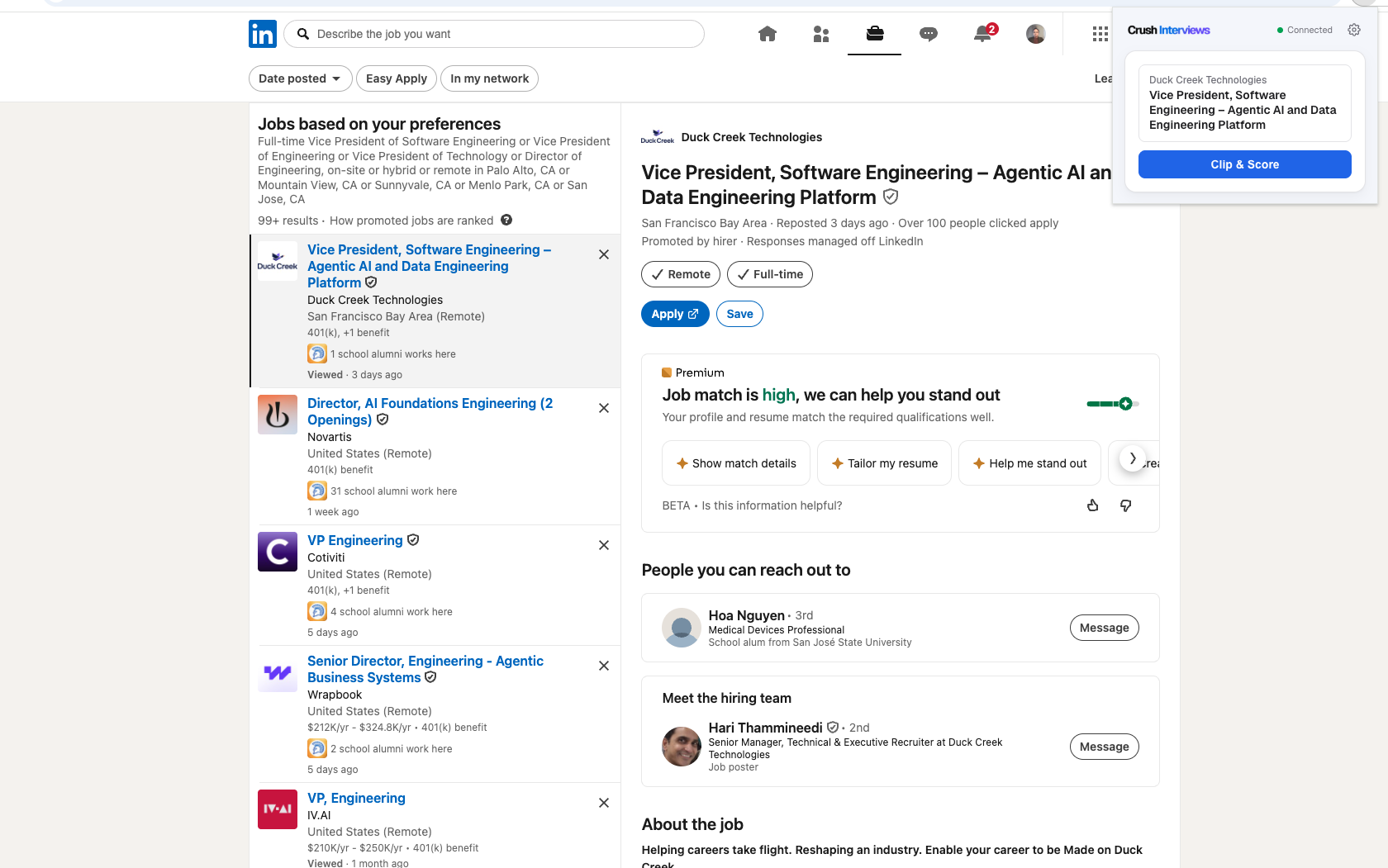
When you find a role yourself, Crush Clip & Fill adds it from any page in one click and scores it the same way. A role you found and a role the agent found are indistinguishable afterwards. At apply time the extension answers the form questions from your profile and remembers every answer you approve, so the same question is never typed twice. It fills forms. It never submits.
Six promises that do not have a settings toggle.
- 01
It drafts. You send.
Applications, outreach, follow-ups. Every outbound action stops at a draft you have read. That ceiling is not a setting you can turn off, because a tool that applies under an executive's name is career exposure, not leverage.
- 02
It never invents a job.
Every role in your briefing is a posting that existed when the agent read it, and the agent keeps checking. A role that comes off the board is marked closed rather than quietly left in your list.
- 03
It shows the lines it scored on.
No score is a number on its own. Open any one and you get six dimensions, each quoting the sentence in the job description or in your own resume that produced it.
- 04
It shows you the roles it rejected.
Anything the agent read and set aside is still there, marked not recommended, with the reason. You are never asked to trust a filter you cannot inspect.
- 05
Your connections file is yours.
Warm introductions come from a LinkedIn connections export you upload. No scraping, no credentials, and you can delete it whenever you like.
- 06
You are only nudged twice.
When an application goes quiet the agent drafts a follow-up at day 7 and again at day 14. Then it stops. The chances of getting a reply after a second nudge are very slim.
The agent is included with Crush Interviews at no extra cost. It exists to save the time you spend job hunting, so you can spend it on what matters most: interview preparation.
Start Free TrialThe interview is the last mile. Don't run it unprepared.
14 days of full access, no credit card. Cancel from your account anytime.